Agentic AI: Autonomous AI Agents That Reason, Plan and Act Independently
Agentic AI describes a new generation of autonomous AI agents that don’t just respond to commands, but can reason, plan and act independently across your digital systems. Instead of answering a single question and stopping, these agents keep working in the background — calling tools, checking data and moving a task forward until they reach a useful outcome.
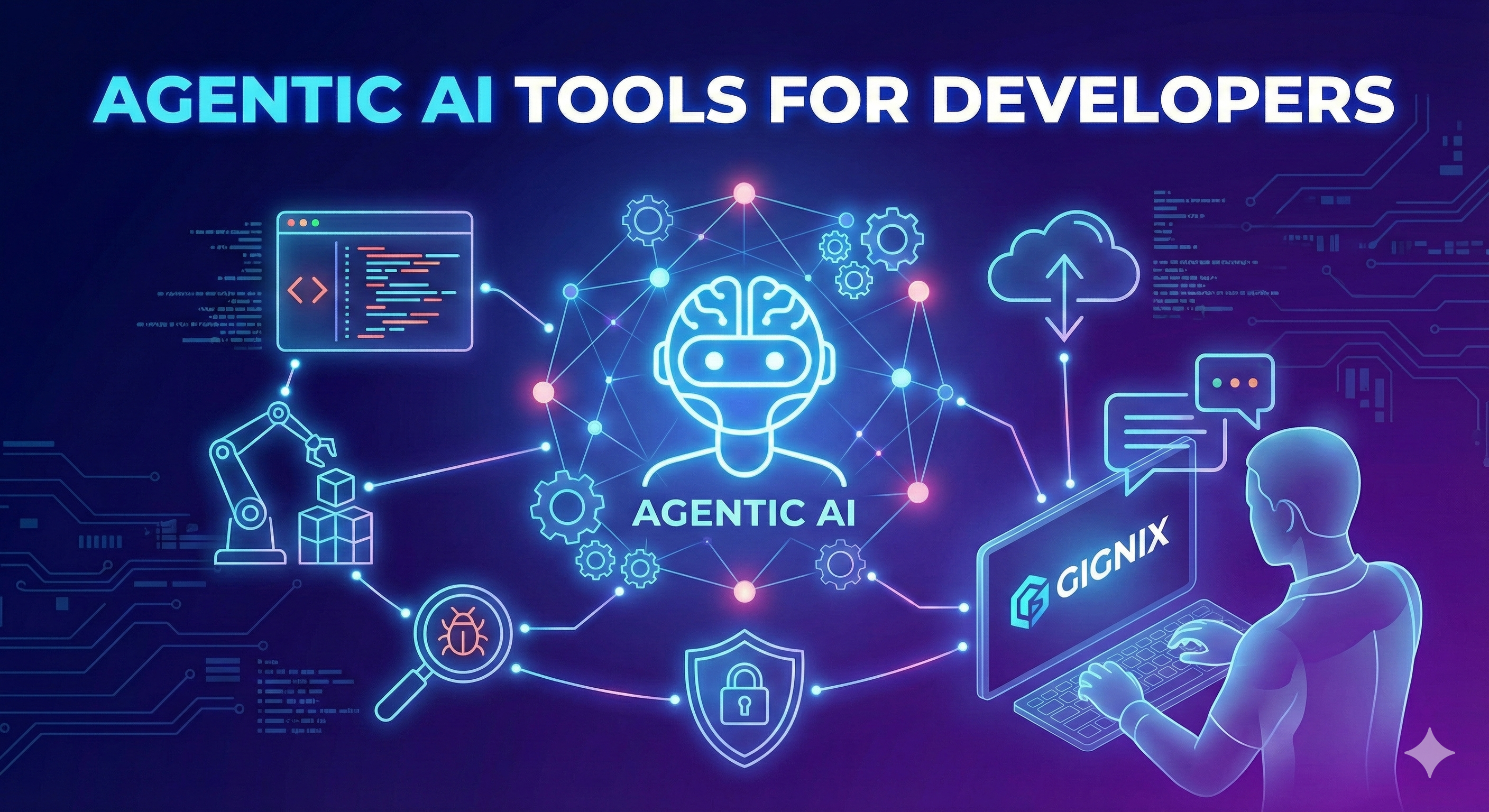
Agentic AI agents can reason, plan and act across tools instead of only answering one-off prompts.
What Is Agentic AI?
At a high level, agentic AI means building AI systems that behave like agents rather than simple chatbots. You give them a goal in natural language — not just a question — and they decide which steps and which tools are needed to reach that goal. They can observe results, adjust their plan and continue acting without you typing every next prompt.
- They are goal-driven: you describe the outcome you want, not every single click.
- They are tool-using: agents call APIs, databases, CRMs, analytics, email and more.
- They maintain short-term memory: keeping important context across multiple steps.
- They run in loops: think → act → observe → update plan, until success or a safety limit.
How Autonomous AI Agents Work
Under the hood, most agentic AI systems follow a repeatable loop. Different frameworks call it different things, but the pattern is similar: the agent reasons about the goal, chooses an action, observes the result, then reasons again.
- 1You give the agent a clear goal (for example: ‘Group this week’s support tickets by theme and draft replies for each group.’).
- 2The agent uses a large language model (LLM) to understand the goal and propose a rough plan.
- 3It decides which tools to call next: search your docs, query the ticket system, fetch recent conversations.
- 4It executes those tool calls, reads the results and feeds them back into the LLM.
- 5Based on what it observes, it updates the plan, takes more actions or prepares a final summary for you.
Key Capabilities: Reason, Plan and Act
The phrase ‘reason, plan and act’ captures why agentic AI feels different from traditional chatbots.
- Reason: the LLM can break vague goals into clearer sub-tasks and decide what to do first.
- Plan: the controller keeps track of which steps are done, what’s next and when to stop.
- Act: the agent actually performs actions through tools — sending requests, updating systems or drafting content.
- Reflect: good agents can also check their own work against simple rules or tests before handing it to a human.
Agentic AI vs Traditional Chatbots
Traditional chatbots are useful for answering questions, but they are limited to the current conversation turn. Agentic AI agents are built to complete workflows. That shift unlocks very different value in real teams.
- Chatbots mostly reply; agents reply and then keep working on your behalf.
- Chatbots rarely touch external systems; agents are wired into your tools and data.
- Chatbots wait for the next prompt; agents can keep acting until they hit a clear stop condition.
- Chatbots are support; agents behave more like junior teammates with clear boundaries.
High-Impact Use Cases for Agentic AI
Because agentic AI can take actions, it shines wherever repetitive digital work follows patterns but still benefits from intelligent judgment.
- Customer support: triage incoming tickets, suggest priorities, draft responses and surface edge cases to humans.
- Sales and marketing: research prospects, summarize accounts, personalize outreach emails and update your CRM.
- Operations: reconcile data between tools, check dashboards for anomalies, and open incidents when thresholds are crossed.
- Product and engineering: summarize long issue threads, generate release notes, propose test scenarios or regression checks.
- Personal productivity: keep a running knowledge base, summarize meetings, and prepare action lists from long documents.
Benefits of Agentic AI for Teams
- Less busywork: agents handle the ‘glue work’ between tools so humans focus on decisions and relationships.
- Faster response times: customers and teammates get answers or drafts in minutes instead of hours.
- Better consistency: workflows run the same way every time, with documented steps and logs.
- Higher leverage: one person can supervise many agents instead of manually doing every step themselves.
Risks and Safety Considerations
Autonomy always brings risk. Poorly designed agents can make wrong assumptions, touch the wrong system or spam people with low-quality outputs. To use agentic AI responsibly, you must design safety into the system.
- Start with read-heavy workflows, where the agent mostly analyzes and drafts instead of writing directly to production systems.
- Use human-in-the-loop review for important actions like sending emails, changing customer data or editing financial records.
- Log every tool call and decision so you can answer ‘what happened?’ and debug issues.
- Limit permissions: give each agent only the minimum access it needs for its workflow.
- Define clear stop conditions and maximum number of steps to prevent infinite loops or runaway behaviour.
How to Get Started With Agentic AI
You do not need a massive platform to start experimenting with agentic AI. A simple and safe starting plan looks like this:
- 1Pick one narrow workflow that is easy to evaluate (for example: summarizing support tickets or drafting weekly status emails).
- 2Write down the goal, inputs and ideal outputs in plain language. This becomes the core of your agent prompt.
- 3List the tools the agent needs: which systems will it read from, and where (if anywhere) is it allowed to write?
- 4Build a prototype with human review: the agent proposes drafts or actions, and a person approves, edits or rejects them.
- 5Measure results: time saved, quality of outputs, error rates, and user satisfaction. Then decide whether to automate further steps.
"The goal of agentic AI is not to replace people, but to remove the repetitive clicks so people can focus on judgment, creativity and relationships.
Looking Ahead: The Future of Agentic AI
Over the next few years, more of your everyday tools will quietly gain agentic capabilities. Email clients will propose follow-up sequences, analytics platforms will investigate anomalies, and developer tools will watch logs and suggest fixes before incidents explode. Teams that learn how to design, supervise and evaluate autonomous AI agents now will have a serious productivity advantage.
Key Takeaways
- Agentic AI turns static chatbots into active teammates that can reason, plan and act across your tools.
- Autonomous AI agents follow a loop of thinking, acting and observing until they reach a goal.
- The best early use cases are repetitive digital workflows with clear success criteria.
- Safety depends on narrow scopes, human review, strong guardrails and good logging.
- Start small, learn from one well-designed agent, then expand your agentic AI playbook.
Agentic AI is still early, but the direction is clear: more software will act on our behalf, not just answer questions. If you understand how autonomous AI agents reason, plan and act today, you will be ready to build and supervise the next generation of intelligent tools at work.